
A Dishwasher Is a Labour Decision
Washing capacity at peak hours determines how fast plates and glasses return to service, and whether you need an extra pair of hands at the sink. Treat a commercial dishwasher as an investment that trades equipment for labour and hygiene consistency, and the selection logic becomes simple: work out your peak-hour volume, then match the machine class to it.
Three Machine Types, Three Scales
| Type | Typical use | Strength | Watch out for |
|---|---|---|---|
| Undercounter | Cafes, bars, small restaurants | Compact, fits into the bar, consistent glass washing | Limited capacity at high peaks |
| Hood type | Mid-size restaurants, single-site kitchens | Balance of capacity and footprint, works with inlet and outlet tables | Table space and flow must be planned early |
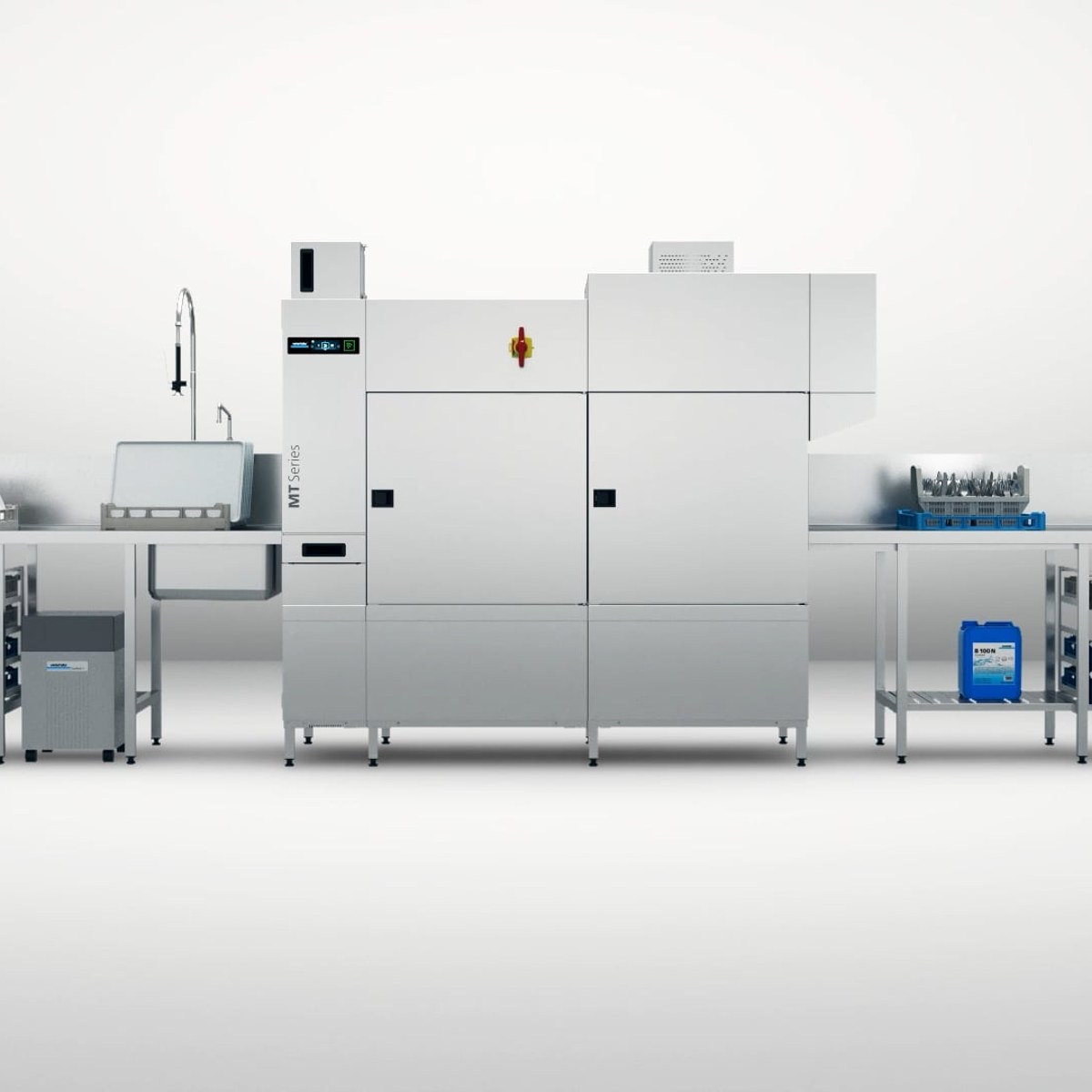
| Rack conveyor | Canteens, hotels, central kitchens | Continuous high volume, highest output per operator | High space, power and plumbing demands; needs professional planning |
Actual capacity varies by brand and model. Confirm with manufacturer specifications and a site assessment.
Three Variables That Decide Wash Results
- Water quality: hard water causes scale on heating elements and spots on glassware. In high-hardness areas, water treatment upstream of the machine pays for itself, and matters most where glassware is the focus.
- Temperature and power: hygiene depends on stable high-temperature cycles. Insufficient electrical capacity slows recovery and throughput, so confirm site power early.
- Chemicals and drying: commercial machines need commercial detergent and rinse aid, and the dose affects both results and cost. Drying performance decides whether ware goes straight back to service.
Four Site Conditions to Confirm
- Peak-hour ware volume, based on your busiest hour rather than the daily average.
- Electrical capacity and voltage available at the site, checked before install rather than after.
- Water supply and drainage positions relative to the machine, which shape the install method and cost.
- Wash flow: soiled in, clean out, without crossing paths or bottlenecks.
Common Questions
Do commercial dishwashers need a water softener? It depends on local water hardness. In harder-water areas, softening or filtration extends machine life and eliminates spotting on glassware.
Hood type or rack conveyor? Decide by peak volume and space. Most single restaurants are well served by hood-type machines; conveyors make sense when volume requires continuous washing and the site can support it.
Can we use household detergent? No. Short high-temperature commercial cycles require commercial detergent and rinse aid. Household products foam excessively and can interfere with operation.
How often does a dishwasher need servicing? Daily cleaning of filters and wash arms is a routine task; the interval for deeper service depends on usage and water quality. Follow the manufacturer schedule and keep records to protect the warranty.
Not Sure Which Class Fits?
Tell us your peak volume and site conditions and book a selection consultation.
See also: product categories, dishwasher troubleshooting, the real cost of kitchen equipment.
Applied Kitchens, the commercial kitchen brand of Applied Solutions Group, represents European professional warewashing brands and provides machine sizing, water quality advice, installation and manufacturer-backed after-sales service, with integrated water treatment where needed.