
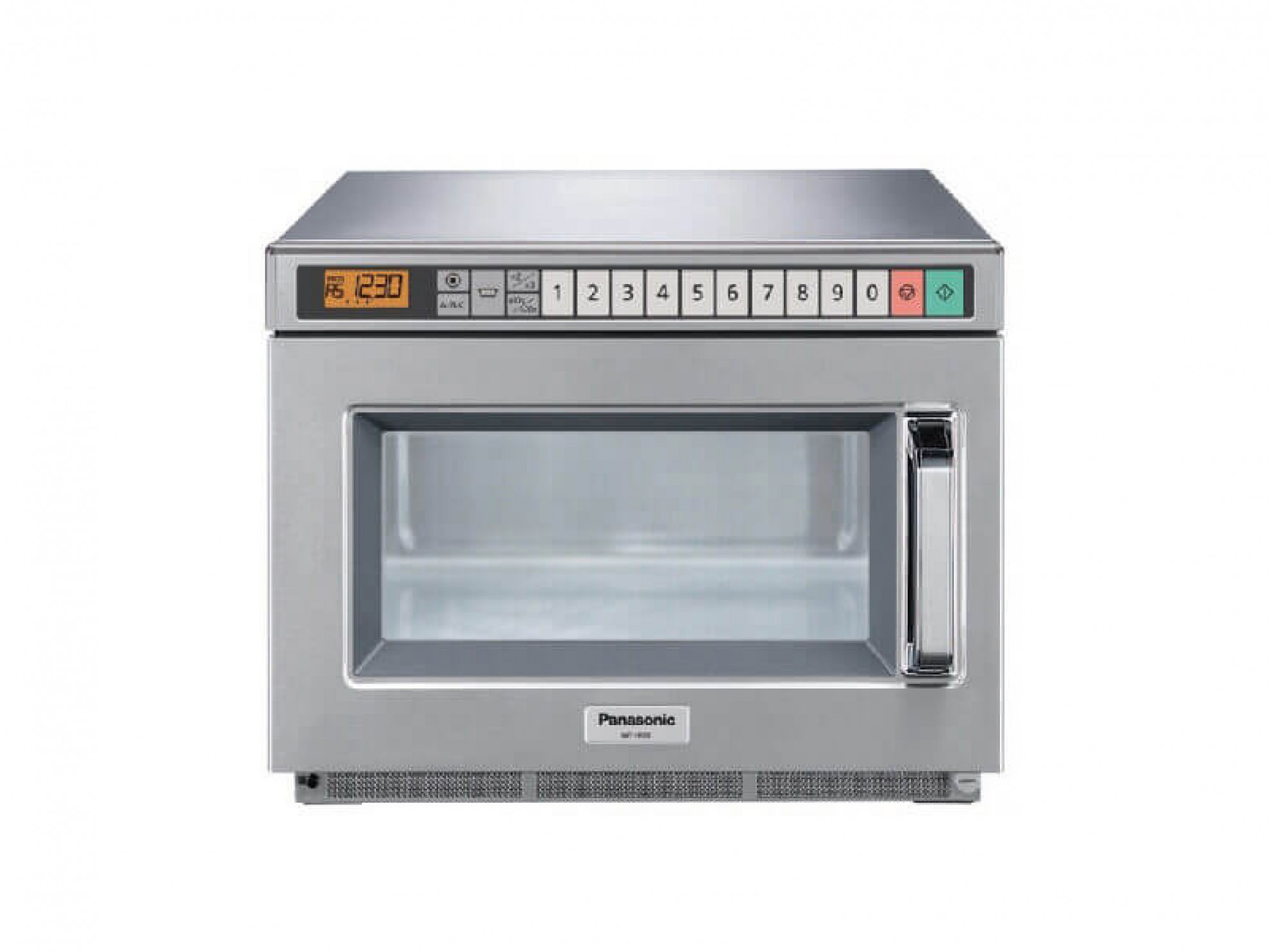
The commercial microwave is one of the most-used appliances in any food business; at the peak, a shop may run it every minute. Choose well and service keeps moving; choose badly and waiting times and breakdowns hit operations directly. Here are four things to get clear before you buy.
1. How commercial and domestic microwaves differ
Commercial microwaves are built for continuous, high-frequency use, with higher output, more even heating and programmable settings, so every member of staff gets the same result from the same button. Domestic models are not designed for long trading hours and tend to wear out quickly in a shop.
2. Reading microwave power: it sets the waiting time
The higher the output, the faster each portion heats. Convenience stores and light-meal chains use high-power commercial microwaves for exactly this reason: to cut the wait for every order at the peak. The Panasonic commercial microwave supplied by Applied Kitchens, for example, offers three power levels, 1800W (high), 750W (medium) and 300W (defrost), with simultaneous top and bottom microwave feed for more even heating. High-power models are usually 220V, so check your sockets and power supply before buying.
3. Capacity: measure the containers you use most
Capacity is not just litres; what matters is whether your usual meal boxes and plates fit inside. This Panasonic model has an 18-litre cavity measuring 330×310×175 mm internally. Checking your largest container against the internal dimensions is more reliable than comparing litres.
4. Reheating only, or crisp results too?
A microwave only heats; it does not brown or crisp. If your menu includes sandwiches, pizza or reheated fried food where texture matters, look at speed ovens that combine microwave with hot air:
| Model | Heating method | Power | Key features |
|---|---|---|---|
| Rnice microwave speed fryer | Microwave + hot air + far infrared | 220V single-phase / 3kW | Cooks frozen food without thawing; suited to chain outlets and convenience stores |
| Kolb Atollspeed | Hot air + microwave | 220V single-phase / 2.7kW | Catalytic filter, no exhaust hood needed; bakes 12-inch pizzas |
| TurboChef Sota | Microwave + vertical recirculating hot air | 220V single-phase / 6.2kW | UL KNLZ listed for ventless operation; smart menus updated via Wi-Fi or USB |
Applied Kitchens is the Taiwan distributor for Rnice and supplies Kolb, TurboChef and Panasonic. In malls and cafés without exhaust ducting, ventless models are a common choice, although the building's rules still apply.
Frequently Asked Questions
Can a domestic microwave be used commercially?
Not recommended. Domestic models are not designed for continuous high-frequency use, wear out quickly over long trading hours and usually have lower output.
Is a higher-power commercial microwave always better?
Higher power shortens heating time but needs a matching power supply. Check your electrical capacity and service volume before deciding on output.
What is the difference between a microwave and a speed oven?
A microwave only heats, without browning or crisping. A speed oven combines microwave with hot air to reheat quickly while keeping a crisp texture.
Can a speed oven be used without an exhaust duct?
Some models can. The TurboChef Sota is UL KNLZ listed for ventless operation, and the Kolb Atollspeed uses a catalytic filter so no exhaust hood is needed; the building's rules still apply.
Next step
Ask about specifications and pricing: tell us your menu, peak volume and site conditions, and Applied Kitchens will recommend suitable models.
Further reading: Commercial cooking equipment, Coffee shop equipment checklist, Chain restaurant equipment strategy