
For bubble tea shops, cafés and restaurants that sell a lot of iced drinks, no ice means no sales. A commercial ice machine is also one of the easiest pieces of equipment to undersize: it keeps up on a normal day, then runs dry at the summer peak, or it arrives on site only to find there is no drain or not enough power. Check these five points before you request a quote.
1. Start with daily ice demand on your busiest summer day
Ice machines are rated by daily production, so the first step is working out how much ice you use in a day:
Daily ice demand = peak-day cups × ice per cup + ice for prep, chilling and display
For example, if you sell 400 cups on a peak day at 150 g of ice per cup, drinks alone need 60 kg, before adding ice for chilling ingredients or seafood display. Size for your busiest summer day, not the average.
2. Look at production and storage together
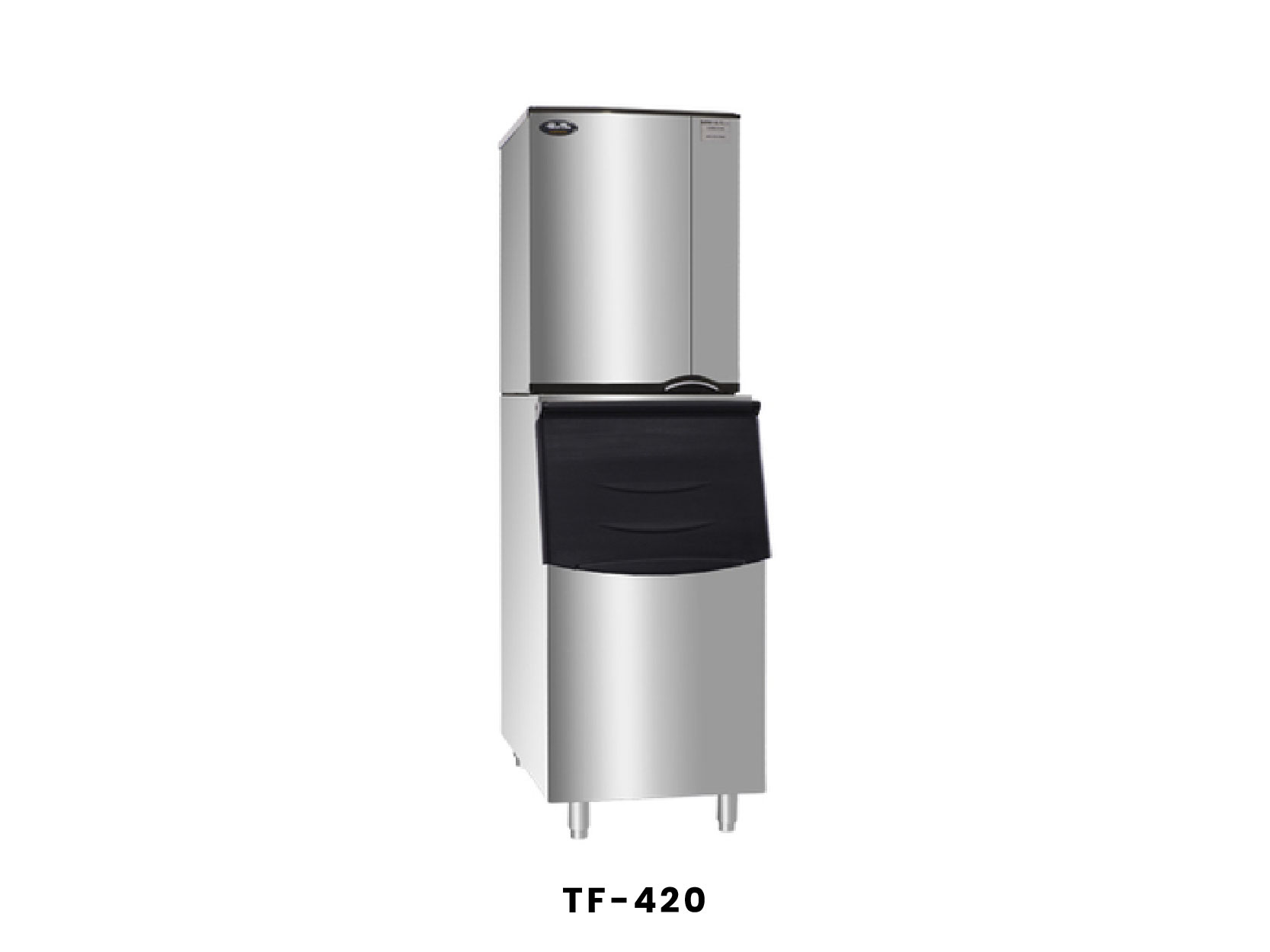
Daily production decides how much ice you can make back in a day; bin storage decides how much ice is on hand during the rush. Look at only one of the two and you can still run out. The table below shows the Sunice TF series, for which Applied Kitchens is the Taiwan distributor:
| Model | Daily production | Bin storage | W×D×H (mm) | Power | Best for |
|---|---|---|---|---|---|
| Sunice TF-210 | 105 kg | 39 kg | 660×700×920 | 220V single-phase / 580W | Cafés, light-meal shops, bar ice |
| Sunice TF-420 | 204 kg | 145 kg | 560×870×1570 | 220V single-phase / 860W | Bubble tea shops, restaurants |
| Sunice TF-1000 | 455 kg | 281 kg | 760×870×2050 | 220V single-phase / 2300W | High-volume drink shops, hotels, contract catering |
Specifications are taken from the product page; final configuration is confirmed in the quotation.
Averaged per hour, the TF-210 makes about 4.4 kg, the TF-420 about 8.5 kg and the TF-1000 about 19 kg. When ice is used faster than the machine can replace it, the storage bin has to carry the gap, so shops with a concentrated peak need enough storage to cover those hours.
3. Real output depends on room and water temperature
Rated production is measured at a specific ambient and inlet water temperature. In a Taiwanese summer, kitchens and bars run hot and so does the incoming water, so actual output is usually lower than the rating. Leave a margin when sizing; shops that sell mostly iced drinks may want to go one size up.
Placement also affects efficiency. A machine next to the range, in an unventilated corner or pushed against a wall cannot shed heat and will produce less. Leave clearance around the cabinet as specified in the manufacturer's installation guide.
4. Confirm three connections before installation: water, drain and power
An ice machine needs both a water supply and a drain. Meltwater and process water must drain freely, so if there is no floor drain or drain line on site, plan one during the site survey.
All three Sunice TF models run on 220V single-phase, which suits most shopfronts, although a dedicated circuit is recommended. Check height too: the TF-1000 stands 2.05 m tall, so measure the delivery route, door widths and ceiling height in advance.
5. Water quality and cleaning protect hygiene and machine life
Ice goes straight into drinks, so it deserves the same hygiene standards as food. Minerals in the water build up as scale in the ice-making system, reduce efficiency and are a common cause of breakdowns. Plan commercial water filtration at the same time.
Day-to-day cleaning depends on how easy the bin is to clean. The Sunice TF series has a one-piece moulded plastic bin interior with no corners for dirt to collect, a stainless steel cabinet and an LCD status display. For cleaning and service intervals, see our commercial kitchen equipment maintenance guide.
Frequently Asked Questions
How big should a commercial ice machine be?
Work out ice demand on your busiest summer day, then compare it with both daily production and bin storage. If most of your ice is used during a short peak, the bin must hold enough to cover those hours.
What size is a commercial ice machine?
Taking the Sunice TF series as an example, the TF-210 measures 660×700×920 mm, the TF-420 560×870×1570 mm and the TF-1000 760×870×2050 mm. Beyond the cabinet itself, allow for ventilation clearance, the delivery route and ceiling height.
What is the difference between production and storage?
Production is how much ice the machine makes in a day; storage is how much the bin holds at one time. The first sets how quickly ice is replaced, the second how much is on hand at the peak.
Why is actual output lower than the rated figure?
Rated output is measured at a set room and water temperature. Hot summer rooms, warm inlet water, a spot next to a heat source or tight clearances all reduce production.
Does an ice machine need a drain?
Yes. Besides a water supply, it needs a free-flowing drain. Confirm the drain location on site before installation.
Do I need water filtration for an ice machine?
It is recommended. Water quality affects the taste and hygiene of the ice, and minerals cause scale that adds to breakdowns and service costs.
How should cafés and bubble tea shops choose differently?
Ice use varies widely. Cafés mainly need ice for iced coffee and the bar, while bubble tea shops use ice in almost every cup. Size the machine from your menu and peak cup count; see our coffee shop equipment checklist and bubble tea shop equipment list.
Next step
Book a site survey and specification review: Applied Kitchens will check water supply, drainage, power and placement, then recommend a model based on your menu and peak cup count.
Further reading: Commercial refrigeration, Bubble tea shop equipment, Coffee shop equipment checklist
Applied Kitchens is the Taiwan distributor for Sunice ice machines, providing equipment planning, supply, installation and after-sales service for commercial kitchens and bars.