
Cafés, bars and drink shops wash far more glasses than plates. A glass washer cleans glasses quickly and sends them straight back to the bar, so service does not stall while staff wait for clean glassware. Before comparing brands, check these five points.
1. A dedicated glass washer, or a dishwasher for both?
Bars that mainly wash glasses and are short on space suit a dedicated undercounter glass washer; if one machine must handle both glasses and dishes, consider an undercounter or hood-type dishwasher. Many bars wash glasses separately from greasy plates to keep grease film off the glassware.
| Model | Type | Capacity | Power | W×D×H |
|---|---|---|---|---|
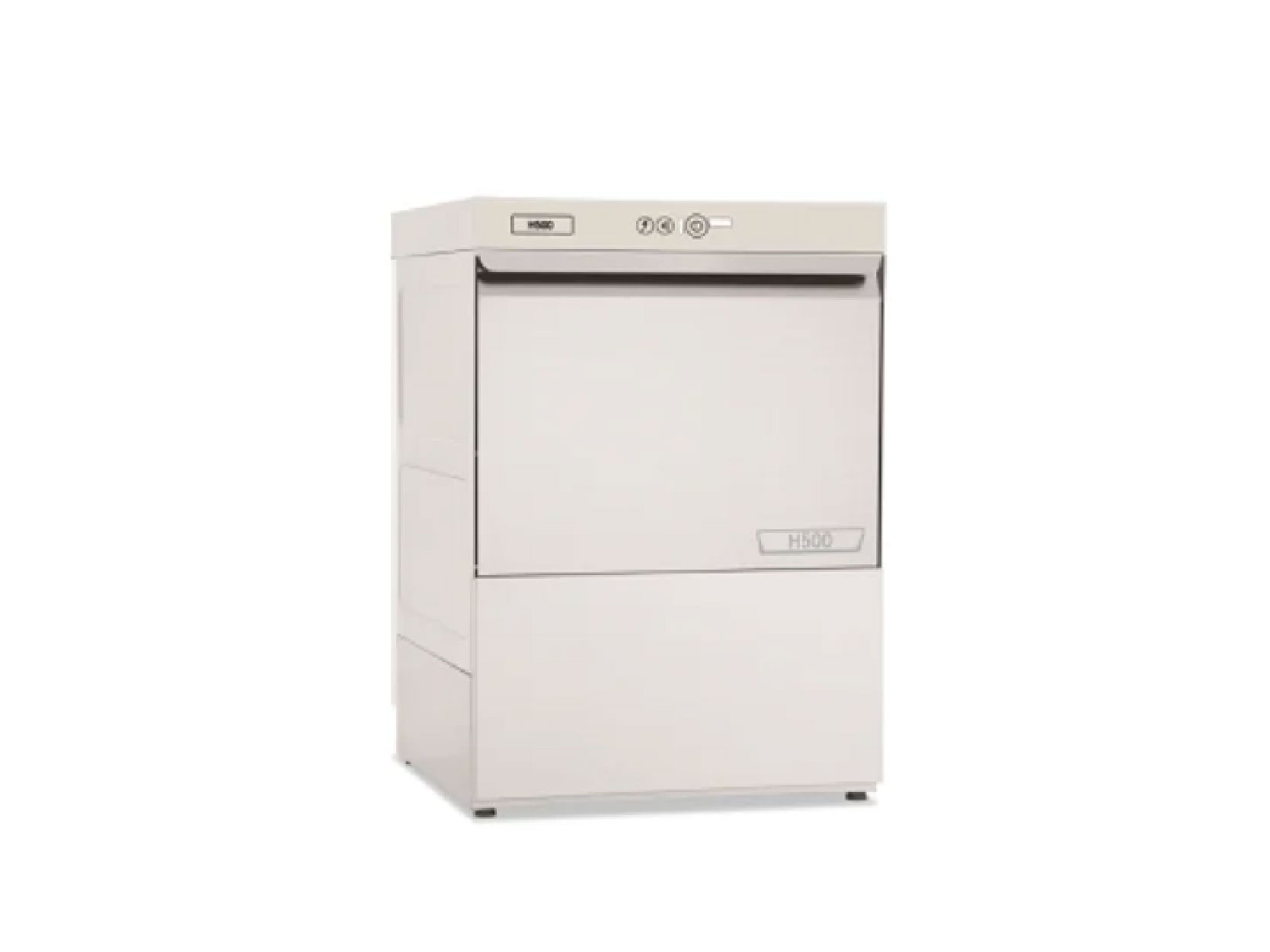
| Hobart H500 | Undercounter glass washer | 60 racks per hour | 220V single-phase / 3.1kW | 57.5×60×82 cm |
| MEIKO UPster U500 | Undercounter dishwasher | 1,440 glasses / 720 plates per hour | 220V single-phase / 6.9kW | 60×60×85 cm |
| MEIKO UPster H500 | Hood-type dishwasher | 1,440 glasses / 720 plates per hour | 220/380V three-phase / 10.6kW | 68.7×85×205 cm |
Specifications are taken from each product page; final configuration is confirmed in the quotation.
2. Measure your tallest glass first
The most common problem is that the tallest glass will not fit. The Hobart H500 has an opening height of 36.5 cm and a 50×50 cm rack. Before buying, check your tallest glassware, such as stemware, beer glasses and takeaway cold-drink cups, against the opening height; it is a more practical test than capacity.
3. Capacity: work back from the peak hour
Size capacity from how many glasses you use in the busiest hour, not the daily total. The Hobart H500 washes up to 60 racks per hour, and both MEIKO models are rated at 1,440 glasses per hour. Shops with a small glass stock and fast turnover need even more headroom, or washing will fall behind service.
4. Installation: power, water and space under the counter
Undercounter models sit beneath the bar, so measure the clear height, width and depth under the counter and leave room for the door and servicing. A glass washer needs both a water supply and a drain. The Hobart H500 and MEIKO U500 run on 220V single-phase; the MEIKO H500 hood-type model needs three-phase power. Confirm these conditions during the site survey.
5. Water quality decides how clear the glasses look
Spots and cloudiness on washed glasses are usually caused by mineral-rich water. Scale also reduces cleaning performance and machine life, so plan commercial water filtration at the same time. The Hobart H500 uses high-temperature washing and completes washing and drying in one cycle, reducing hand polishing and breakage from handling.
Frequently Asked Questions
Can one machine wash both glasses and dishes?
Yes, undercounter and hood-type dishwashers can also wash glasses. For bars that mainly wash glasses and are short on space, a dedicated glass washer saves room; shops with high volumes of both can choose a dual-purpose model or wash glasses and plates separately.
How tall does the glass washer opening need to be?
It depends on your tallest glass. The Hobart H500 has a 36.5 cm opening; check your tallest glassware against it before buying.
Does a glass washer need a drain?
Yes. It needs both a water supply and a drain. Confirm the water and drain points under the bar before installation.
Why do glasses have spots after washing?
The usual cause is hard water. Test the water first, then consider filtration or softening. Detergent and rinse aid settings also affect the result.
Which type suits a café?
Cafés with steady glass volumes and limited bar space usually choose an undercounter glass washer; those that also wash dessert plates and cutlery may prefer an undercounter dishwasher.
Next step
Book a site survey and specification review: Applied Kitchens will check bar space, power, water and drainage, then recommend a model based on your glassware and peak volume.
Further reading: How to choose a commercial dishwasher, Commercial dishwasher not cleaning properly?, Coffee shop equipment checklist